
In his 2018 book 21 Lessons for the 21st Century, historian [1] Yuval Noah Harari made a striking claim: "The last few decades have been the most peaceful era in human history." He had the numbers to support it. In ancient farming societies [2], human violence caused up to 15 per cent of all deaths; in the twentieth century, about 5 per cent; and by the time he was writing, only around 1 per cent. Large-scale war had become something most people read about rather than lived through.
Less than a decade [3] later, that picture has shifted. In 2025, around 250,000 people were killed in organized violence [4] — the second-deadliest year since 1994. According to researchers at Uppsala University, 65 armed conflicts were active that year, and the number of wars between states reached its highest level since the Second World War. War has returned to Europe, the Middle East, and beyond.
Harari warned that no law of nature guarantees peace; it holds only as long as humans keep choosing it. And alongside war's return, something else is unfolding [5] almost in real time: a change in how war itself is fought.
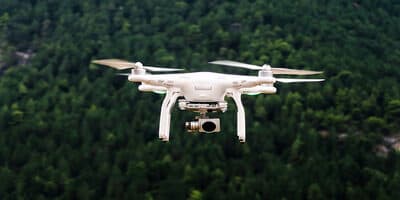
The clearest example is the drone. Analysts at West Point argue that this is not just a new weapon but the start of a new era of warfare [6], comparing it to the arrival of the tank in the First World War. The evidence is in Ukraine, where cheap first-person-view drones, assembled from off-the-shelf parts for as little as $400, are destroying tanks and armored vehicles worth millions. By 2025, drones accounted for roughly 80 per cent of Russia's battlefield losses.
Why does this worry military planners? It comes down to cost. Battlefield power once meant expensive machines — tanks, jets, warships — that only wealthy states could afford to [7] build and maintain. A weapon that costs a few hundred dollars but can destroy a multi-million-dollar target changes that math. When a small country, or even a small group, can do serious damage on a modest [8] budget, the old advantages of size and wealth start to matter less.
Even experts who agree on the diagnosis disagree on what comes next. Some think cheaper weapons make conflict easier to start; others expect the same technology to lead to new defenses and new forms of deterrence [9]. What most of them agree on is that the barrier to causing serious harm has dropped, and is unlikely to rise again. That raises a practical question: when the cost of destruction falls this far, what has to replace it to keep the peace Harari described?