
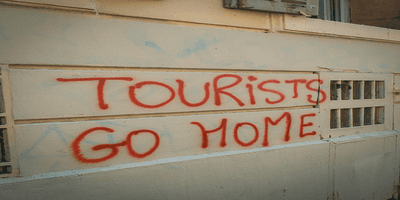
In 2025, "overtourism" made Dictionary.com's shortlist for Word of the Year. The choice was not surprising. An estimated 1.5 billion people travelled internationally that year, breaking records again. In one survey, 73 per cent of travellers said they worried about overtourism, while a third said they had personally experienced it.
Ongoing news kept the word visible [1]. Venice raised its one day access fee, Japan capped [2]the number of climbers on Mount Fuji, Santorini suspended [3] new hotel construction permits, and Greece limited cruise ships at popular islands. The frustration behind all these actions is identical: too many visitors, too fast, in too small a space.
Interestingly, one driver of this crowding [4] is a program almost everyone admires: the UNESCO World Heritage designation. Created under the 1972 World Heritage Convention, the label recognises places of "outstanding universal value" and helps countries protect them. It was built to preserve. However, the same label has become one of the most powerful brands in travel, causing listed sites to see visitor numbers jump.
The benefits of a listing are real. It brings international recognition, conservation funding, and expert support. For lesser-known sites, especially in Africa and Latin America, the label has built local tourism economies and attracted vital funds. It also helps in emergencies. Palmyra in Syria and Mosul in Iraq received international restoration [5]support partly due to their listed status. For many small communities, this recognition has kept local traditions alive.
At the same time, some listed sites struggle with the attention. UNESCO's 2025 report found that one-third of natural sites and one-fifth of cultural sites face serious threats, with overtourism among the main causes.
Venice, listed in 1987, has since lost more than half of its full-time residents. As apartments turned into tourist rentals and everyday shops gave way to souvenir stores, staying became too expensive and inconvenient for ordinary [6]Venetians. In Bali, housing near listed temples has drifted out of reach for local families. In Barcelona, the city capped daily entry to Park Güell, Gaudí's famous mosaic-filled park, to keep crowds from wearing it down. In each place, the label meant to protect has drawn crowds the sites were never built to handle.
Most big initiatives look like this up close: real gains on one side, real costs on the other. How do we weigh them? It probably depends on who benefits, who bears the burden, and whether the damage can be undone [7]. There is no single right answer, which makes it a topic worth talking about.