
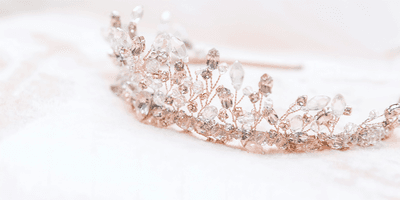
Picture this: a woman walks into a coffee shop on a Monday morning, orders her usual, and sits down to open her laptop. Nothing unusual — except she's wearing a tiara. Not a subtle headband. An actual tiara. And nobody blinks.
That's the scene playing out in fashion capitals right now. Tiaras, the kind you last associated with weddings, Disney princesses, or the British royal family, are becoming an everyday accessory. Senior editors at major fashion magazines have been spotted wearing them with jeans and a basic tee. High-end designers are putting them on runway models dressed in leather jackets and boots. The industry's position is clear: the tiara no longer needs a special occasion to justify[1] itself.
So why now? The return of the tiara is less about wanting to look like royalty and more about a collective hunger for a little drama in everyday life — a desire to turn an ordinary Tuesday into something that feels, even briefly, like it was worth getting dressed for. The cultural timing matters here. Young people in 2026 are navigating real financial pressure, political uncertainty, and a job market that doesn't make the future feel particularly bright. In that context, putting a tiara on your head before heading out is a quietly rebellious[2] move. It says: things may be chaotic, but I still get to decide how I show up today.
The market has noticed. Industry analysts project a 20% increase in demand for embellished[3] hair accessories in 2026, with the broader category growing at nearly 14% annually. The trend skews younger and female, fueled by social media, but it has spread across aesthetics and subcultures in ways that suggest it has more staying power[4] than a typical seasonal moment.
Here's what makes it interesting beyond the world of fashion. The tiara was historically an object that told you where someone stood — royalty, bride, prom queen. It once marked[5] a status you were given. Now people are putting it on because they simply decided to. No title, no occasion, no explanation needed.
That's a pretty good summary of where a lot of people are right now. The real question is — what would it take for you to wear one?