
To keep food fresh, we often store it in refrigerators and freezers. However, refrigeration can only do so much to prolong the shelf life–there is a wide range of techniques to keep foods safe much longer, even enhancing its flavors along the way.
Unfortunately, food does not last forever. Organic matter decays easily, and at room temperature, mushrooms go limp and white mold forms on garlic cloves in a matter of a few days. Even in the fridge, they do not last more than a couple of weeks.
Food goes bad because microorganisms like to eat them too. As bacteria, yeast, and mold break down organic substances, food starts to deteriorate and develop off-odors. Thus, slowing down microbial activity is one way to keep foods from spoiling [1]. But while microorganisms can be killed off by irradiation or pasteurization, these methods require industrial equipment and sophisticated settings, which cannot be easily emulated outside of food processing facilities.
Then, what could be done to deactivate those microorganisms? They tend to thrive in environments with sufficient moisture, warmth, air, and, of course, food. This is the reason refrigerators and freezers can prolong the shelf life to a certain extent as they lower the temperature of food and slow down microbial growth. Yet, they do not stop microbial activities altogether, and refrigerated or frozen food will eventually start to decay. In fact, fridges can provide a very moist environment, thereby somewhat supporting the growth of bacteria and molds.
Back in the days before all the advanced preservation technology, people had discovered a number of natural elements that suspend microbial growth, including salt, sugar, and acid. Salt, by withdrawing moisture and increasing salinity, creates an environment where microorganisms cannot flourish [2]. At certain salt levels, particular microorganisms actually thrive and produce chemicals that taste great to humans–this process is known to us as fermentation. Some examples of food preserved [3] with salt are ham, bacon, and anchovies.
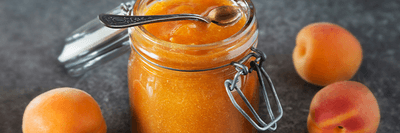
Sugar also has preservative abilities. Like salt, sugar withdraws moisture from microorganisms, creating a fatal environment. In ancient times, honey was often used to store fruits before the mass production of white sugar started in the 17th century. In northern climates without enough sunlight to dry food, sugar was a very useful ingredient to preserve fruit pieces. Candied fruits, jam, and jelly are all still-popular foods that utilize the power of sugar.
Another substance that kills “bad” microorganisms or slows down their activities is acid. One of the most well-known acids is vinegar. Also created through fermentation, vinegar can be made from any ingredients with sufficient amounts of sugar, from grains to fruits. This vinegar can keep vegetables and other foods for a long period of time by pickling them. Also, some microorganisms that initiate fermentation naturally produce acid themselves during the process, giving foods like kimchi and yogurt a pleasant sour taste, as well as extending their shelf lives. Besides these traditional methods, various chemical acids are artificially added to many processed foods to increase the shelf life.
Instead of adding substances, sometimes depleting an essential element results in a longer shelf life. Many types of bacteria and molds thrive in a humid environment, and thus, dehydration has been a popular and successful preservation technique for thousands of years. Not only does withdrawing moisture inhibit [4] the growth of microorganisms, but it can also alter the food’s flavor and texture, making it more pleasant and complex. Dehydration is one of the easiest and most effective ways to keep foods longer at home, especially for ingredients like herbs, peppers and mushrooms. Simple air-drying could do the job, provided one has good air circulation and low humidity.
Last but not least, one of the latest developments in food packaging is vacuum sealing. Oxygen is another critical element for many microorganisms, and removing air and tightly packing foods can lengthen shelf life. When vacuum sealing was first introduced in 1963, it was used only on a small scale for limited purposes, but now, available in various sizes and models, vacuum sealers are very popular among restaurants as well as in the kitchen. However, there are plenty of “anaerobic [5]” bacteria, which can survive and grow without oxygen, such as E. coli, so one must not rely on vacuum sealing alone to extend shelf life.
In summary, the key to storing foods is to create an environment that prohibits microbial activities, except for a few that benefit humans. If you are interested in exploring food preservation techniques yourself, start with a portable dehydrator or a vacuum sealer. Eventually, you might branch out to making pickles or ham from scratch!