
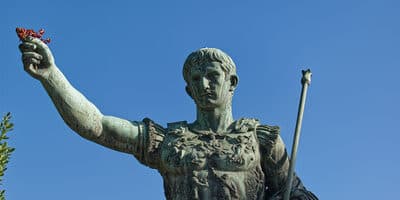
Julius Caesar is a play written by William Shakespeare around 1599, more than 400 years ago. It is based on [1] real history: the story of Julius Caesar, the most powerful man in ancient Rome, who was killed by the people closest to him. But why did Shakespeare, an Englishman, write about Rome?
At that time, Queen Elizabeth I of England was old and had no children. Everyone was quietly asking the same scary question: what happens to a country when its powerful leader is suddenly gone? Writing about the Queen directly was dangerous, so Shakespeare told a Roman story instead. The audience understood: this old story was really about their own time.
The story is simple but shocking. Caesar has won great wars, and the people of Rome love him. Some leaders begin to worry: what if Caesar becomes so powerful that he turns into [2]a king who controls everything? A group of them decides Caesar must die, and they need one more person to join them: Brutus, Caesar's close and trusted friend. Brutus loves Caesar, but he loves Rome more. After many sleepless nights, he joins the plan. On a day known as the Ides of March, the group surrounds [3] Caesar and attacks him. When Caesar sees Brutus among them, he stops fighting and speaks his famous last words: "Et tu, Brute?" — "Even you, Brutus?" His heart is broken before his body falls.
But the story does not end there. At Caesar's funeral, his loyal friend Antony gives a powerful speech [4]. He repeats, again and again, that Brutus is "an honorable man," but each time, the words sound less true. Slowly, the crowd turns angry, and Rome falls into war. Brutus, who killed his friend to save Rome, ends up [5] destroying the peace he wanted to protect.
The most interesting character is not Caesar, but Brutus. He is not evil or jealous. He truly believed he was doing the right thing. And that is the hardest question in the play: can a good person, with good reasons, still make a terrible choice?
Four hundred years later, we still remember this story every time someone is hurt by a person they trusted.