
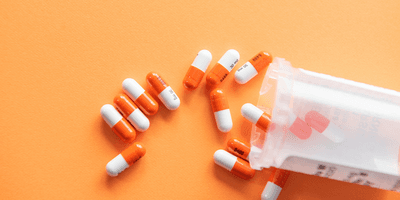
The obvious answer is the United States. The more interesting answer is: it depends what you mean by biggest. Sort by value and the US wins by a margin that is almost embarrassing. Sort by volume and the story looks entirely different. That gap between the two rankings is not a quirk. It is the whole point.
The volume leaders are not surprising. India and China between them account for nearly 3 billion people, rely heavily on cheap generics [1], and have healthcare systems designed to distribute medicine at scale. India's drugs are often available without a prescription [2]. China expanded public insurance so aggressively over the past decade that prescription volumes now rival those of the United States. If you had to guess which countries consume the most medicine by sheer quantity, you would probably get there on the first try.
The value leader is less obvious. The United States has 5% of the world's population. It generates 44% of global pharmaceutical revenue. That is not a rounding error. American patients fill around 4.3 billion prescriptions a year, and they pay prices that no comparable country comes close to matching. Brand-name drugs in the US cost on average two and a half times more than in 32 peer nations. A monthly supply of Humira, one of the world's top-selling drugs, runs about $6,000 in the US. In the UK, the same drug costs roughly $1,300. Same molecule, same effect, very different invoice [3].
Three things created this gap. First, the US has no national price controls. Manufacturers name their price. Second, the private insurance system fragments negotiating power across thousands of separate payers, none of whom can bargain the way a national government can. Third, strong patent [4] protections keep generics off the market for years, giving manufacturers time to extract maximum value before competition arrives.
The practical consequence is that American patients effectively subsidize [5] pharmaceutical innovation for the rest of the world. Europeans, Japanese, and Koreans get the same drugs at government-negotiated rates. Americans cover the difference.
That deal is finally being renegotiated. In 2024, Medicare negotiated prices for ten drugs directly for the first time, cutting costs by up to 79%. At least fifteen more are scheduled for 2026. Whether this shifts the balance or simply moves the burden around is the question the industry cannot stop asking.