
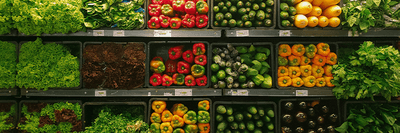
The organic food market has grown rapidly, almost doubling in size every year. From apples to pop tarts, there are organic options for almost anything you could think of, but are they always better for us?
In 1990, the Organic Foods Production Act was passed to set up national standards for organic produce. Since then, the label “organic” has continued to grow in its marketing power to make consumers feel better about their decision in terms of their health and the planet. Despite the steep price tags on organic foods, many firmly believe that the prices are justified and seldom question the actual worth of organic products.
What makes something organic anyway? In order for farmers to label their produce organic, there are several standards to meet, which vary from country to country. However, the general consensus is to limit chemicals used in conventional farming, such as synthetic pesticides and fertilizers, antibiotics, growth hormones, and preservatives, to the effect of producing “more natural” foods that are supposedly less harmful to humans and the environment.
Using less of these chemicals is certainly a good thing, but, for many reasons, blindly using the organic label to make purchase decisions does not always lead to environmentally conscious decisions.
Setting up an organic farm requires a lot of resources. To qualify for an organic certification, the farm has to fill out paperwork, hire more workers for weeding [1], purchase certified manure, and pay annual fees. Then, they have to wait about three years to be able to call their products organic, for the transition to complete. Small, local farms that have been practicing organic farming all along might never be able to get certified simply due to the associated cost.
Beyond pragmatic [2] issues, farming, in general, is burdensome for the land. Crops leach nutrients from the soil, and even the “more natural” fertilizers, when applied in large quantities, create chemical imbalance and side effects in the soil. There are studies claiming that conventional farming may be better for the environment as synthetic substances are more effective, generating a similar result in smaller quantities.
To limit the use of chemicals even further in organic farming, crop rotation (annually rotating different types of produce) and companion cropping (planting crops together) are encouraged. These methods allow the soil to recover quickly and minimize the need for pest control, without the aid of additional substances. However, these practices are not mandatory and only encouraged; unfortunately, they are unpopular due to their labor intensive nature and comparatively smaller yields.
Another major issue with organic farming is the amount of soil it needs. All things being equal, crops need more soil in the absence of synthetic fertilizers. As demand for organic food increases, more farmland has to be created, but from where? With the limited space on this planet, rainforests are being bulldozed [3] over to produce “more environmentally friendly” foods. Quite ironic, isn’t it?
Lastly, we ought to consider the organic food’s carbon footprint [4] when shopping. Let’s say you live in the suburbs of South Korea. The local farm next door grows seasonal fruits and vegetables, using conventional methods with legal amounts of fertilizers and pesticides. On the other hand, the gigantic organic store ten miles away from your town sells a wide range of organic produce, shipped from all over the world. It is clear buying produce from which place has a greater carbon footprint–imagine driving to the organic store and buying mangoes wrapped in thick plastic packaging, which probably traveled all the way across the ocean on a plane (hopefully the mango farm was not built over a forest).
Conventional farming does create a number of problems, and organic farming is one way to solve them. Yet, the term “organic” has been overused for marketing and sales, without guaranteeing significant benefits to the environment. In order to support the farmers that are really contributing to the making of a healthier planet, look for small, local farms that grow a range of produce and use less substances [5], even if they do not have the shiny organic label!