
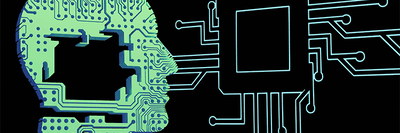
Imagine talking to your friend kilometers away without picking up the phone, controlling your computer without touching your mouse, or even changing the way you feel on command. These seem like surreal abilities in science fiction.
But this is becoming reality. The interaction between man and machine has become more intensive with smartphones and computers, but now scientists are putting those devices in our brains.
BCI Technology and its Potential
Neuroscientists are working on a brain-computer interface (BCI), a device that directly connects the brain to a computer through a tiny chip in the brain. These implanted devices read a person’s thoughts and translate them into commands [1].
This technology was first developed as a therapeutic to assist individuals who have lost limbs or other motor functions due to spinal cord injury, allowing them to control a computer cursor or move a wheelchair just by using their mind. The BCI sensors read electrical brainwave signals and then input them to a signal processing hardware that translates the signals into useful commands. While this technology is still in its infancy [2], it could potentially treat conditions such as brain injury, epilepsy, or schizophrenia.
BCIs also serve as “output” devices, allowing researchers to send signals to the brain and induce visual stimuli or other responses. In one experiment conducted in 2014, two participants wearing BCIs played a videogame together to shoot down rockets, and only one person wearing an input BCI could see the screen where rockets appeared. The other person with an output BCI had the fire button but could not see the rockets. When a rocket appeared on the display, the person in front of the screen sent a signal through the BCI to the other person holding the button. Upon receiving the cue to press the fire button, the other participant shot the rocket. Even though the two participants were physically separated and had no other communication, they were able to accurately shoot down the rockets.
Researchers hope to use this technology to transmit more complex information directly between brains.
Ethical Concerns about BCI
Sending signals from one brain to another is an exciting breakthrough. But some are concerned with the ethical issues involved with BCIs.
Threats to privacy:
If BCIs can read our thoughts, there is a tremendous gray area regarding the collection of personal data. As we have seen in social media privacy disputes [3], dealing with personal information can be tricky.
Thus, before BCIs become commonplace, we should sort out ways to effectively educate the public and protect their data. Potentially, neural data could be owned by third parties and used to create targeted advertisements, calculate insurance premiums.
Hacking risks:
With BCIs having the ability to write to and read from our brains, hackers could gain access to our precious thoughts and implant certain thoughts and ideas into our minds remotely.
A new form of cybersecurity would have to be developed to prevent such attacks.
Muddled self-awareness:
As technology is incorporated into our bodies, we might start to lose a sense of “self,” wondering if our actions are a result of our free will or of the BCI.
If, as in the rocket experiment, BCIs can induce signals and thoughts directly into our brains, companies, governments, and individuals could potentially influence what and how we think.
Potential for discrimination:
Those with BCIs will inevitably be distinct from those without any technological modifications. As these enhancements become more available, there will be increasing pressure to adopt them.
Thus, equitable [4] access to BCIs could become a new social issue.
Future Prospects for BCI Technology
These ethical issues have led scientists, politicians, and industry experts to introduce “responsible neuroengineering.” This approach ensures that this technology is developed in a socially desirable way that is in the public’s best interest.
Similar policies have already been implemented regarding AI, led by the IEEE Standards Association in 2016. International standards created by committees like this help researchers and policymakers design and utilize technologies in a manner that is responsible and is received positively by the public.
Meanwhile, entrepreneurs like Elon Musk are becoming increasingly interested in the prospects of BCIs. In 2016, Musk founded Neuralink, a neurotechnology company aimed at developing BCIs to help people with neurological disorders. While this is their short-term goal, Neuralink hopes to push the boundaries of [5] human enhancement.
But Musk and many others’ attention on the technology warrants a closer survey on its ethical dimensions. The day when every human has a chip implanted in their brain is still far off. Yet, we have seen BCIs’ potential threats to privacy, information security, and one’s self-awareness. Thus, ethical guidelines must be considered now to ensure the responsible development of BCIs.