
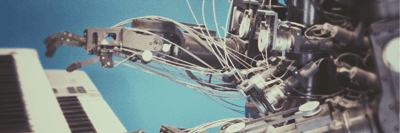
Robots are taking over [1] the world. It’s been said over and over again, and with each fancy new invention, it’s worth pausing to admire how far we’ve come. The latest big thing has been ChatGPT, created by OpenAI capable of writing code, writing essays, and so much more. It stands to replace the likes of search engines as we know them, but what kinds of work are vulnerable to a replacement, and which are safe by comparison?
As always, the answer varies. AI solutions are a feat of human ingenuity [2] that stand to change the landscape of the workplace, and a recent survey of American companies indicates that nearly half have used ChatGPT, among other AI solutions, to replace parts of their human workforce. The implications of the aforementioned are staggering [3]. When asked the kinds of jobs that it’s likely to replace, ChatGPT humbly assures us that “As an AI language model, I don’t replace jobs,” but does go on to admit that AI more generally has the potential to replace jobs “involving routine, repetitive, or manual tasks.”
Things that require a human touch, though, will remain difficult to replace in the immediate future. Take, for example, judges, whose work requires both a combination of human experience and subjective [4] assessment. While things requiring our unique touch are safe for now, there’s no telling how AI (or, more likely) human society stands to change in the future. In the meantime, though, it might be best to think of AI as simply changing the nature of human work rather than “replacing” people altogether. After all, even those roles made seriously redundant [5] by AI will still require some degree of human oversight.