
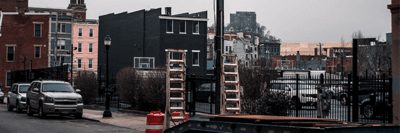
A scrappy apartment building is demolished, and a condo goes up in its place. The mom-and-pop grocery store across the street is sold, where a CVS opens, and a Starbucks, too. Cafés with ivy-strewn pergolas and vegan bakeries spring up throughout the neighborhood. Landlords start renovating their apartments, and next thing you know, rent goes up. Long-time residents are evicted—either literally or because they cannot keep up with hiking rents. Others stay to witness their neighborhood transform into an unfamiliar place.
This is an all-too-familiar scenario: wealthier people moving into an underserved [1] community, pushing out former residents. However, while this process, called gentrification, has become a contentious [2] topic in recent years, it is often discussed in broad terms, making it difficult to gain a clear understanding of the phenomenon and potential solutions. Depending on your perspective, you might also associate gentrification with the creation of safer neighborhoods, discrimination, or cultural dilution that strips a place of its authenticity, replacing a vibrant culture with a more generic one.
A dictionary definition tells us that gentrification is a process of economic change in a historically disinvested neighborhood, by way of real estate investment and higher-income residents moving in. This process often entails cultural and demographic changes in terms of the education level and racial makeup of residents.
That said, this definition doesn’t give us the full picture. Since real estate investment is associated with gentrification, new construction in lower-income neighborhoods is often criticized, as people dub a new construction as “the gentrification building”: buy-outs [3] will happen, richer people will flood the neighborhood, moving into the new building or scooping up investment projects nearby, increasing the area’s housing prices and forcing residents to leave.
However, while new construction is associated with gentrification, it’s not always the cause. Studies have found an overwhelming supply effect: when more affordable housing is available, there is downward pressure on housing prices. Thus, building market-rate or affordable housing in an area can revitalize the local economy without causing the negative effects of gentrification.
An important distinction is to be made between gentrification and displacement. Gentrification happens to a region while displacement happens to its residents when they are forced to leave their homes. As long as real estate investment in a region is accompanied by the construction of new affordable housing, residents won’t have to leave their neighborhood altogether.
The real problem is when gentrification threatens the livelihood of a community’s long-time residents. In recent years, New York City’s Lower East Side and Chinatown have faced similar challenges as activists took to the streets to protest the development of four luxury buildings by Extell Development Company. One Manhattan Square, the first to be built among the planned four in 2019, is a gleaming 847-foot glass and steel structure. It towers over a neighborhood where the median family income is about $40,000; Extell’s apartments are selling for millions of dollars a piece. As a result, rents have gone up in an area that has traditionally served lower-income residents, and apartments, except for rent-controlled ones, have gone through renovation to attract wealthier residents.
Meanwhile, critics have lamented [4] Chinatown and the Lower East Side’s gentrification as the demise of New York City’s diverse culture. Rooted in Jewish and Asian American heritage, the area has been appreciated for its gritty alleys and unique atmosphere. The influx of wealthier outsiders might undo all that.
Ultimately, gentrification is a complex subject, but the potential threats it places on long-term residents must be acknowledged.