
Amidst a constant stream of heavy headlines—global conflicts, rising oil prices, and the unpredictable swings of financial markets—a streak of fire climbed into the Florida sky on April 1, 2026. The successful launch of Artemis II felt like a rare moment of clarity. Even when the world feels upside-down, humanity’s pioneering spirit[1] finds a way to keep moving forward.
For those who haven't followed every update, Artemis II is the first mission in over 50 years to carry humans toward the Moon. It isn't a landing just yet, but a ten-day journey for four astronauts to fly around the lunar far side. They are traveling inside the Orion spacecraft, a high-tech capsule perched atop the world's most powerful rocket. While the rocket provides the brute force[2] to escape Earth, Orion serves as the crew's home and life-support system, protecting them from the vacuum of space and the searing heat of re-entry. Just like the iconic scenes from 20th-century cinema, hundreds of thousands gathered along the coast to watch the ascent, reminded of a time when the sky represented a shared frontier rather than a theater of conflict.
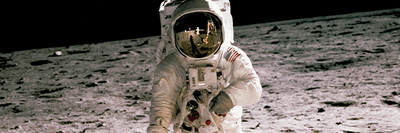
This return to the moon has been a long time coming. The last time humans left footprints on the lunar surface was in December 1972, during Apollo 17. While that mission was a "flags and footprints" era of short-term visits, Artemis II is designed for the long haul[3]. It serves as the foundation for permanent lunar infrastructure, including a future space station called the Gateway. This shift in purpose is mirrored by[4] the people on board. Unlike the all-white, all-male crews of the 70s, this mission includes the first woman, the first person of color, and the first non-American to venture into deep space, finally acknowledging that the journey to the stars belongs to all of us.
The methods of reaching the Moon have also fundamentally shifted from a purely government-run operation to a collaborative model. While NASA oversees the mission, the hardware and technology are now largely a product of partnerships with private corporations like SpaceX, Lockheed Martin, and Boeing. Naturally, after five decades, the technological gap is vast[5]; where the Apollo 17 guidance computer relied on processing power that wouldn't rival a basic modern appliance, today's Orion spacecraft uses high-bandwidth systems capable of live-streaming 4K video from the lunar far side directly back to our pockets. This integration of commercial innovation is simply the modern standard for how we now manage the complexities of deep-space travel.
In a time of global uncertainty, Artemis II is a quiet beacon of progress. It proves that while we struggle with immense challenges on the ground, we are still capable of reaching for something greater. Though the technology, the crew, and the methods have changed since 1972, the impact on those of us watching from Earth remains the same: a profound sense of hope. As Orion continues its 230,000-mile journey, let’s cheer for the courage of the crew and the brilliance of the thousands who put them there. Even in the dark, we are still moving forward.