
Production Eng
QC & Dealing with Defects
Production English (3)
Updated: 2026.01.01
1 min read · Intermediate
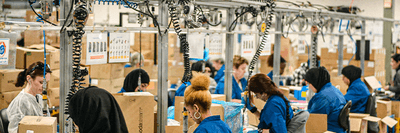
No matter how perfect the plan is or how much material you have, it means nothing if the final product is flawed. This session focuses on identifying defects, finding root causes, and taking action to prevent the same mistakes from happening again. You will learn the practical language needed to explain "what went wrong," "who will fix it," and "how to handle items that don't meet the standards."
[Tips for Success]
- For Students: Think of a recent quality issue or a common defect in your workplace. Use at least 4 phrasal verbs from the list below to explain to your tutor how the problem was found and how your team solved it.
- For Tutors: Do not worry about industry-specific details. Instead, focus on whether the student can use phrasal expressions accurately and improve the natural flow of their sentences. Feel free to ask clarifying and/or follow-up questions to better understand their ideas.
[10 Essential Phrasal Verbs & Examples]
- Find out: To discover the root cause of a defect or the exact point where an error occurred.
Example (Semiconductors): We need to find out exactly why the dust levels in the cleanroom spiked this morning.
- Look into: To investigate or examine a quality flaw or a customer complaint in detail.
Example (Automotive): Our quality team is looking into the reported brake noise in the latest batch of vehicles.
- Point out: To identify and call attention to a defect or an item that does not meet the standard.
Example (Apparel): The inspector pointed out several loose threads on the final batch of jackets.
- Throw out: 품질 기준을 통과하지 못한 제품을 폐기하거나 버리다.
사용 예시 (식음료): 보관 온도가 너무 높았기 때문에 500리터 이상의 우유를 throw out 해야만 했습니다.
- Sort through: To examine a group of items carefully to separate the good units from the defective ones.
Example (Consumer Electronics): We have to sort through the entire shipment to find the units with damaged screens.
- Fix up: To repair or restore a damaged or defective item to its proper condition.
Example (Heavy Industry): It will take two days to fix up the welding issues on the main steel structure.
- Rule out: To eliminate a potential cause of a defect after testing or investigation.
Example (Pharma): After testing the water quality, we can rule out contamination from the filtration system.
- Back up: To support an argument or a claim using quality data or historical logs.
Example (Chemicals): You need to back up your claim with the testing logs from the night shift.
- Go over: To examine a product's condition or a quality checklist thoroughly from start to finish.
Example (Aerospace): The technicians will go over every single engine part before the scheduled test flight.
- Watch out for: To be alert for specific defects or risks that may occur during the production process.
Example (Cosmetics): During the filling process, please watch out for any air bubbles in the lotion bottles.
[Discussion Questions]
Students, please prepare your answers using the phrasal verbs above.
- During production, what specific defects do you constantly watch out for?
- What is your standard procedure for quickly sorting through a batch of products to separate the good units from the flawed ones?
- When a defect is found, what steps do you take to rule out potential causes before you can find out the root issue?
- If a minor defect can be fixed up, who is responsible for going over the repaired item to ensure it meets the quality standards?
- What is the process for implementing lessons learned across the entire production line to prevent defect recurrence?
- What are the Key Performance Indicators (KPIs) used to measure the success of our quality control efforts?
- What is the standard communication protocol for notifying and collaborating with other departments (e.g., Sales, CS) when a major defect occurs?
- Which departments do we collaborate with most often to find out the root cause of defects, and what information do we share to back up our findings?
*This material is designed for the exclusive use of Ringle students on the Ringle platform.