
There is no shortage of poorly executed French stereotypes in Hollywood films, but the Merovingian scene in Matrix Reload, the second installment of the film series, might have gotten something right. This brief scene captures the French penchant [1] for fine food, opulence, and refinement, despite a villainous streak shorn into the French character Merovingian like many others written by Americans. (The word “Merovingian” comes from the Mérovingiens who ruled the Franks from 476 to 750 AD, the family recognized as the “first race” of the kings in France.)
The Merovingian sips on wine from a gilded [2] glass and explains fatalism with cake and wine analogies; whatever intention lies in the design of this scene, it happens to be accurate in so far as it associates Frenchness with fine food as France is the birthplace of haute cuisine, commonly called fine dining today.
Although the art of feasting, and meals composed of several courses were already entrenched in the culture for a long time, it wasn’t until the 17th and 18th centuries that haute cuisine bloomed and flowered into its full form. At the center of this French culinary revolution was Louis XIV, also known as the Sun King, whose autopsy [3] revealed a stomach three times the size of that of an average adult. In fact, French cuisine went through little change during the Middle Ages, and even during the Renaissance, when more refined cooking was introduced, the French diet remained largely unchanged. But Louis XIV’s preference for delicacies, his love for gardening, and the fruits and vegetables it produced, set the stage for a culinary revolution that would raise French cuisine to its pinnacle.
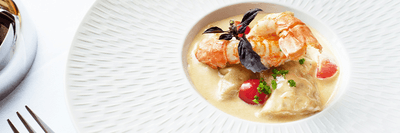
Haute cuisine today is characterized by meticulous [4] preparation and careful presentation of food, served through multiple courses and with particular silverware depending on the dish. It prizes sophistication, richness, suavity [5], harmony, and the appearance of artfulness. The most basic meal structure is entrée-plat-dessert, while a more extensive version could be:
- Hors d’œuvre or mise en bouche - Tiny bites to awaken the palate.
- Potage - Soup.
- Entrée - A starter dish.
- Plat - Main dish. There could be several main dishes, with a Trou Normand or Entremet in between. Trou Normand is a “pause” between dishes where diners take a glass of Calvados or Calvados-soaked sorbet.
- Fromage - A cheese course. Typically, they will bring out a cheese board, and you can select three (or more) cheeses.
- Entremet - A sweet bite meant to aid in the transition from savory to sweet.
- Dessert - A sweet pastry, cake, or fruit.
All that said, France’s gastronomic scene is larger than its haute cuisine. In France, there are different types of restaurants that have taken root since the beginning of the French Revolution, when restaurants were first popularized. To enjoy haute cuisine, be on the lookout for les restaurants gastronomiques (gastronomic restaurants) or restaurants with one or more Michelin stars. For a hearty comfort meal with meat and french fries, knock on the doors of Bouillons, a type of restaurant that emerged to serve the middle and lower-middle classes. There are plenty of upscale Bouillons inspired by 19th-century art nouveau aesthetics, but the original idea of Bouillons is decent-quality meals at a low price (there are satires about the low-quality food at Bouillons and ill-mannered waiters there, which are supposed to be part of the experience). If you are on the go, or want to enjoy a light meal alone without pressure, Bistros, Brasseries, or Crêperies will fit the bill.
One thing I haven’t mentioned. There is the apéro: this is not part of the meal, but a time you unwind with a glass of wine or cocktail right before it starts. If you are invited over for lunch or dinner, the meal will likely start with a thirty-minute to an hour-long apéro session. At restaurants, before ordering, you will be asked if you’d like an alcoholic beverage for the apéro.