
This material was written by Junyoung, a 13 year old from Australia, through the Let’s Write Together program on Ringle Teens.
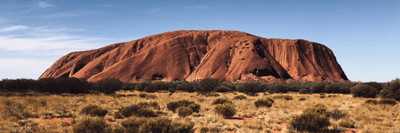
Given that the Anangu tribe, an Australian Indigenous group, originates from the Uluru-Kata Tjuta National Park, Uluru is among the most well-known and prominent rocks in the world. Indeed, due to the Park's significance to both culture and nature, UNESCO safeguards it. Uluru is located more than 300 kilometers from the nearest major town, Alice Spring, making it a remote location in the southern section of the Northern Territory, in the heart of Australia. Climbing to this famous rock was allowed until late 2019. However, as of October 2019, tourists aren't allowed to climb the rock.
Uluru is well-known for its grandeur, beauty, and its relevance for Australia's First Nations people. For a long time, I really wanted to go there and, last week, I got the chance to do so on a family vacation. Not only is it stunning, but my dad's staff members claimed it was the first time they had ever shed a tear upon seeing a rock. Unfortunately, my flight got canceled only 5 hours before departure, so we were forced to stay in Sydney. But why is this rock so popular that a person like me—a teenager who isn’t from Australia—wants to see it? The answer for that question would probably be the meaning of Uluru and what it signifies.
It is an Indigenous cultural landmark that they believe was created during the Dreaming. The Dreaming, according to the Australian Aboriginal [1] people, is a representation of the time when the Ancestral Spirit traveled the globe, creating life forms and other significant physical geographic formations and monuments. An Aboriginal worldview known as The Dreaming is based on the idea that all living things are interconnected [2] to one another. Under this view, Uluru is a living cultural landscape that is sacred and necessary for the identity of Indigenous Australians, particularly the Anangu tribe.
Uluru is a sacred place for the Anangu tribe, and in the area only spiritually important people can climb up and enter the caves. The tribe had been pleading to shut Uluru down to outside climbers long before it became illegal. Before October of 2019, the Australian government allowed anyone to climb the rock. However, as the Indigenous cultures were more recognised and highlighted gradually, the government finally listened to Anangu’s voice and shut down Uluru.
Throughout Australian history, many Indigenous people were slaughtered by European colonists who were settling down in Sydney and other parts of Australia. The conflicts between settlers and Indigenous people lead to a civil war, where the superiority of British weapons defeated the Indigenous peoples and led to their centuries-long oppression [3], hence the time it took for the Anangu’s requests to be respected.
I believe that prohibiting visitors from climbing the Uluru is a smart decision because, just as UNESCO preserves our culturally-significant landmarks, it is essential that we likewise maintain and safeguard the Uluru for the future. I'm hoping I'll be able to visit Uluru soon.