
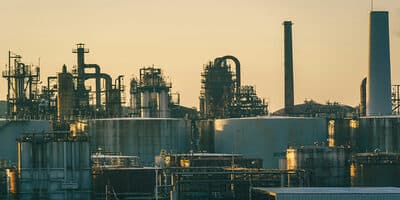
On October 3, 2026, the Houthis, an Iran-backed group in Yemen, claimed to [1] have struck an Aramco facility in Riyadh, the capital of Saudi Arabia, with missiles and drones. Saudi authorities did not immediately confirm the attack, but satellite imagery and journalists on the ground [2] documented large fires and smoke rising from a refinery near the city.
Headlines about Middle East oil attacks have been common all year. This one was different, though. The fires reached deep inside Saudi territory, far from where the fighting had been contained [3].
For most of 2026, the market absorbed shocks surprisingly well. After the US and Israel launched air strikes on Iran in February and Iran blockaded the Strait of Hormuz, Middle East crude exports still recovered [4] to pre-war levels by late September, according to ship-tracking data from Kpler. Analysts credited the region’s resilience. Oil was flowing, just through different routes. Saudi Arabia’s Red Sea port of Yanbu became the main alternative [5] to the blocked Hormuz, and the market seemed to breathe again.
That calm is now being tested. Over the past two months, the Houthis have declared a naval blockade of Saudi shipping and claimed strikes on Aramco facilities in Jizan, Yanbu, and now Riyadh. Saudi authorities reported 73 people injured in recent Houthi attacks and said some energy facilities were temporarily shut down. Brent crude, which had slipped to around $100, rose above $109 within days.
The market’s resilience so far has rested on a simple assumption: if one route is blocked, another will open. But the two conflicts, Iran-US in the Gulf and Houthi-Saudi on the Red Sea, are now pressuring supply routes from both sides at once. The alternative paths that saved the market six months ago are themselves under threat [6]. There is no third route waiting in the wings [7].
The US Energy Information Administration raised its Q4 Brent forecast to $105 and said regional production should return to pre-conflict levels [8] by Q2 2027. That outlook rests on the assumption that fighting eases. If it does not, the forecast changes. Tanker insurance rates are already rising. Shipping companies are reviewing their routes. The question in the industry is no longer whether the market will adapt, but how many more hits it can absorb before it cannot.
For the rest of the world [9], this is not only a geopolitical story. It is a cost-of-living story. Higher oil prices feed into shipping, manufacturing, and ultimately into the price of nearly everything we buy. The Middle East feels far away until the receipt at the gas station or the grocery store reminds us otherwise.