
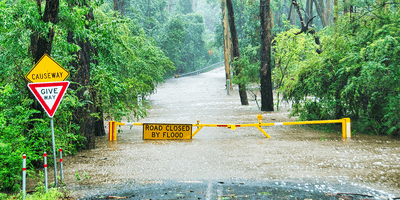
Water is critical for biological life; it sustains us, keeps us hydrated, and some 71 percent of our planet is covered in it. But when water as inclement [1] weather enters our lives, it can destroy our belongings and bring about nightmares that wreak havoc on our present and futures. Take a flood for example, which, beyond home damage, will submerge [2] motor vehicles completely. A car, once submerged, does not become a boat. Instead, water may enter the engine, flood the electronic internals, and leave you (and perhaps insurers) with some difficult decisions.
If the worst should happen, and you find yourself in a vehicle in a flood, it’s important to remain calm. The acronym [3] rescuers recommend keeping in mind is SWOC—seatbelts, windows, out, children first. Because different water levels inside and outside the vehicle will make doors difficult to open, experts recommend opening or breaking a window. Once seatbelts are removed and windows are opened, have children leave the vehicle through the window and climb onto the roof—adults can then follow.
After the flooding ends, a flood-damaged vehicle can have a plethora of issues, some of which are related to the water directly, while others are a byproduct of the damage. Animals might climb into wheel wells if a car is not completely submerged. In cases of complete submersion, the subsequent electronic damage often makes repairs not worthwhile. If you find yourself with a potentially flood-damaged vehicle, try to dry the interior to prevent mold, mildew, and smells. Don’t start the vehicle—instead, have it towed [4] to a professional for an inspection; they’ll help determine if the damage is fixable and the next steps.
Insurance companies, if handling a filed claim for flood damage, will typically have a professional assess the extent of damage. Following, they’ll determine the cost of repair as well as the ACV (market value) of the car prior to the flood damage. Depending on locale, region, and applicable insurance laws, if the cost of the repair exceeds some percent (typically around 80%) of the car’s market value, the insurance company will deem [5] it a total loss and opt to pay out the ACV of the car, rather than paying to repair it. As climate change increases flood risks across the world, be sure to consider insurance and how to ensure your and your loved one’s safety.