
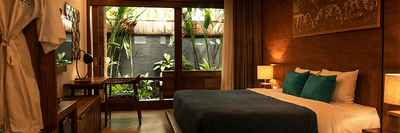
This module is designed for hospitality professionals to handle guest complaints and in-room issues with confidence, empathy, and professionalism. The goal is to move beyond simply solving the problem — it's about turning a difficult moment into an opportunity to build lasting trust with your guest.
[Tips for Success]
- For Staff: Complaints are not failures — they are invitations to show what your hotel is truly made of. Research shows that a guest whose complaint is handled well is often more loyal than a guest who never had a problem at all. Focus on staying calm, listening fully, and acting decisively. Never make the guest feel like they are being a burden.
- For Tutors: Listen as the student handles complaint scenarios. Coach them on tone management — especially the difference between sounding genuinely empathetic versus robotic or defensive. Encourage deeper thinking with follow-up questions such as:
- How would your tone change if the guest was shouting versus quietly upset?
- What would you do if you could not resolve the issue immediately?
- How would you follow up with the guest after the issue has been resolved?
1. Introduction: The LAST Model
When a guest brings a complaint, the instinct is often to jump straight to solving the problem. But guests rarely feel satisfied when they sense that the staff member has not truly heard them first.
In hospitality, one of the most widely used frameworks for complaint handling is the LAST Model:
- Listen: Give the guest your full attention. Do not interrupt. Let them finish.
- Apologize: Offer a sincere, brief apology — for the experience, not necessarily for fault.
- Solve: Propose a clear, immediate action. If you cannot solve it alone, involve the right person.
- Thank: Thank the guest for bringing the issue to your attention. It gives you the chance to make things right.
For international guests staying in Korea, raising a complaint in a foreign language takes courage. Acknowledging that effort can go a long way in de-escalating tension and rebuilding rapport.
Discussion Prompts for Students:
- [1] Have you ever handled a guest complaint that you felt went well? What made it successful?
- [1] Why do you think many guests choose not to complain, even when something is wrong? What does that mean for hotel staff?
2. Case Study: A Night That Keeps Going Wrong
Imagine this scenario:
It is 11:30 PM. A guest, Mr. Alan Hughes, calls the front desk from his room on the 12th floor. He checked in earlier that evening and is clearly frustrated. He explains that the air conditioning in his room is making a loud rattling noise and he cannot sleep. He also mentions that the shower water took over ten minutes to run hot. He says he has an important business meeting at 7 AM and needs to be well-rested.
You check the system and see that the hotel is at 95% occupancy. A room change is possible — there is one Standard King available on the 8th floor, but it is a downgrade from Mr. Hughes's current Deluxe King on the 12th floor.
Mr. Hughes says, with a tired and sharp tone: "I paid for a Deluxe room. I expect Deluxe service."
The front desk agent must:
- ✅ Acknowledge Mr. Hughes's frustration without becoming defensive
- ✅ Apply the LAST model naturally — not mechanically
- ✅ Be transparent about the room availability situation without making the guest feel like a burden
- ✅ Offer a meaningful gesture of goodwill, even if a perfect solution is not available
- ✅ Close the interaction in a way that reassures Mr. Hughes ahead of his early morning
Discussion Prompts for Students:
- [2] Mr. Hughes says "I paid for a Deluxe room. I expect Deluxe service." How do you respond without sounding defensive or dismissive?
- [2] The only available room is a downgrade. How do you present this option while still making Mr. Hughes feel valued?
- [2] What gesture of goodwill could you offer, and how would you phrase it so it feels genuine rather than like a scripted compensation?
3. Role-Play: Your Turn
Take on the role of a front desk agent and role-play the scenario from the case study with your tutor. Your tutor will play Mr. Alan Hughes.
Recap of the situation: Mr. Hughes is calling at 11:30 PM about a loud rattling air conditioner and a slow hot water supply in his Deluxe King room on the 12th floor. He has an early morning meeting and is tired and frustrated. The hotel is at 95% occupancy; the only available room is a Standard King on the 8th floor — a downgrade. He has made clear that he expects the level of service he paid for.
Your tasks as the front desk agent:
- Answer the call and greet Mr. Hughes with calm, attentive warmth.
- Listen fully to his complaints — do not interrupt or rush to solutions.
- Apologize sincerely for the experience using the LAST model.
- Explain the room situation honestly and offer the Standard King as a temporary option with sensitivity.
- Propose a meaningful goodwill gesture and phrase it naturally.
- Close the call in a way that leaves Mr. Hughes feeling reassured and respected ahead of his 7 AM meeting.
Feel free to use the essential phrases below during the role play.
- Receiving the Complaint
- "I'm so sorry to hear that, Mr. Hughes. I completely understand how frustrating that must be, especially at this hour."
- "Thank you for letting us know right away. You absolutely should not have to deal with this."
- "I can hear that this has been a difficult evening. You have my full attention — please tell me everything."
- Apologizing Sincerely
- "On behalf of the hotel, I sincerely apologize for the inconvenience this has caused you."
- "I'm truly sorry that your experience tonight has not met the standard you deserve."
- "That is not the experience we want for any of our guests, and I'm sorry we fell short tonight."
- Presenting a Solution
- "Here is what I'd like to do for you right away — let me send our maintenance team up immediately to look at the air conditioning."
- "I do have an alternative room available. It's on a lower floor, but I want to be upfront with you about that and let you decide."
- "While it isn't a perfect solution, I want to make sure you're comfortable and rested for your morning."
- Offering Goodwill
- "I'd like to offer you a complimentary breakfast tomorrow morning as a small gesture for the inconvenience."
- "I've arranged for a late checkout at 1 PM at no extra charge, so you can rest after your meeting if you'd like."
- "Please allow me to send up some complimentary refreshments while maintenance takes care of the room."
- Closing the Interaction
- "I'm going to personally follow up with you in 20 minutes to make sure everything has been taken care of."
- "Please don't hesitate to call the front desk directly if anything else comes up tonight — I'll be here."
- "I hope the rest of your evening is restful, and we wish you the very best with your meeting tomorrow morning."