
Production Eng
Managing Raw Materials
Production English (2)
Updated: 2026.01.01
1 min read · Intermediate
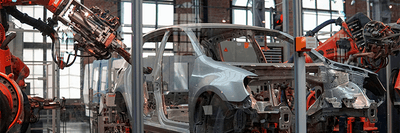
Production planning is the engine, but materials are the fuel that keeps it running. This session covers everything from sourcing raw materials to managing finished goods. We will focus on practical situations: checking on arrivals, dealing with shortages, and communicating with suppliers. You will learn the everyday language needed to keep the supply chain moving smoothly.
[Tips for Success]
- For Students: What is the most "precious" component or material in your factory right now? Use at least 4 phrasal verbs from the list below to explain to your tutor what happens when those items are late, or why having too much inventory can also be a headache.
- For Tutors: Imagine you are a curious colleague or a friend who doesn't know much about manufacturing. Ask simple, "low-pressure" questions like, "Does the whole factory stop if one part is missing?" or "Why don't we just buy everything a year in advance?" Do not worry about industry-specific details. Instead, focus on whether the student can use phrasal expressions accurately and improve the natural flow of their sentences. Feel free to ask clarifying and/or follow-up questions to better understand their ideas.
[10 Essential Phrasal Verbs & Examples]
- Stock up on: To buy or store a large amount of something to avoid a future shortage.
Example (Consumer Electronics): We need to stock up on lithium batteries before the peak holiday season begins.
- Check in on: To investigate or monitor the status or arrival of a shipment or task.
Example (Automotive): Could you check in on the shipment of tires? It was supposed to be here by 9:00 AM.
- Run low on: To reach a point where the supply of something is almost finished.
Example (Food & Beverage): We are running low on aluminum cans, so we might need to adjust the bottling schedule today.
- Follow up with: To contact someone again to get more information or to see if a problem has been fixed.
Example (Construction): I’ll follow up with the steel supplier to see why the structural beams haven't arrived yet.
- Hold up: To delay or stop the progress of an entire process or production line.
Example (Semiconductors): A delay in the specialized chemicals is holding up the entire wafer etching process.
- Count on: To rely on or trust a supplier's promises regarding delivery or quality.
Example (Pharma): We count on our glass vial supplier to maintain 100% sterilization standards for every batch.
- Keep track of: To monitor or record the movement and quantity of items in stock.
Example (Logistics/Warehousing): It is much easier to keep track of raw materials across multiple sites with our new ERP system.
- Call off: To cancel an order, a production run, or a planned event.
Example (Apparel/Fashion): Because the fabric quality was so poor, we had to call off the entire order for 5,000 units.
- Fill in: To provide missing information or to replenish a gap in inventory records.
Example (Aerospace): We need to fill in the missing serial numbers in our inventory records before the final audit.
- Fall behind on: To fail to stay on schedule or meet targets due to supply delays.
Example (Heavy Industry): Due to the port strike, we are starting to fall behind on our export commitments this month.
[Discussion Questions]
Students, please prepare your answers using the phrasal verbs above.
- How do you decide when to stock up on a particular component?
- Which supplier do you follow up with most frequently, and why?
- What is the most critical item that could hold up your entire line if it’s missing?
- How does your team keep track of inventory levels to prevent running low on materials?
- How often do you check in on the status of critical overseas shipments, and what tools do you use for monitoring?
- What criteria do you use to decide if a supplier is reliable enough to count on for on-time delivery of a key component?
- Under what circumstances would your team have to call off a production run due to a major quality or supply issue?
- Besides serial numbers, what other missing information do your team frequently have to fill in to keep inventory records accurate?
*본 교재는 당사 편집진이 제작하는 링글의 자산으로, 저작권법에 의해 보호됩니다. 링글 플랫폼 외에서 자료를 활용하시는 경우, 당사와 사전 협의가 필요합니다.