
There are always two sides to one coin; the very thing that makes plastic so useful also makes it environmentally harmful—you may have seen an ad campaign featuring a doomed [1] turtle eating a plastic bag. Plastic has found widespread usage due to its waterproof and non-biodegradable qualities, but these same qualities make it the nemesis of sea turtles.
Plastic is widely used in our daily lives, from food containers to clothing materials, to bicycle helmets (imagine biking in a wooden helmet). But plastic also has extensive industrial uses, including its use in truck tarpaulins. Truck tarpaulins are heavy-duty waterproof cloth made out of PVC (polyvinyl chloride) designed to protect the loads on the back of trucks. After five to eight years on the road, these tarps get incinerated [2] or end up as landfill waste, a destiny followed by many other plastic products.
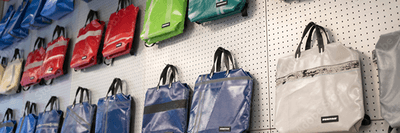
Inspired by the short lifespan of this unwieldy [3] material, the Freitag brothers decided in 1993 to give it a new life, by converting these beasts into functional, waterproof bags for cyclists. Their Zurich flat soon became covered with bits of tarp, bicycle inner tubes, and old car seat belts that would make up the first line of Freitag messenger bags.
Today, Freitag sources 500 tons of old truck tarps across Europe each year to make recycled messenger bags. Having expanded their scope of recycled materials over the years, the Swiss company also uses fabric made out of PET bottles and B-stock airbags that marginally [4] failed the quality test and would have been otherwise discarded.
Freitag designs are retro, urban, and conformingly rebelling. Their production process has an element of an action movie; five tarp buyers hunt down flatback trucks covered with tarps of desired design and color, prowling around truck stops in Europe and constantly sharing information over the phone. These tarps are then primed for the design stage by being cut, inspected, and cleansed with rainwater.
Freitag bags, despite being on the pricier side, nailed one thing: they found the sweet spot between green and urban life. Their entire production process is based on a circular model, spurning [5] the use of non-recycled and non-lasting materials. Each bag has a unique design, and customers can design their own bags as well. But more importantly, they show one possible version of circular consumerism that we might be heading towards: recycle, but make it cool.