
In April 2025, the U.S. rolled out a new wave of tariffs aimed at countries accused of unfair trade practices. A base 10% tariff went into effect on April 7 and now applies to most nations. But several Asian countries were hit with significantly higher “reciprocal [1] tariffs”: South Korea at 25%, Vietnam at 47%, Cambodia at 49%, and China at a staggering 145%, despite previous tariffs on China proving largely ineffective at reducing trade deficits [2] or shifting supply chains.
For now, these higher tariffs are on hold for 90 days as negotiations continue, except for China.
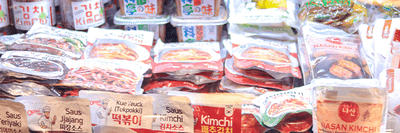
The impact is already being felt at international grocery stores like H Mart and 99 Ranch Market, where many immigrants, international students, and culturally diverse households shop for familiar ingredients. These stores carry staples [3] from countries including Korea, China, Vietnam, Japan, and Thailand—items that are often unavailable or prohibitively expensive at mainstream supermarkets. For instance, a popular oyster sauce sells for $3.99 at 99 Ranch but can cost up to $10.45 elsewhere.
The international grocery sector brought in $55.8 billion in revenue last year and is projected to exceed $64 billion by 2029. Its growth is driven by the expanding immigrant population and younger generations eager to explore global cuisines. Analysts warn that new tariffs may force shoppers to abandon authentic ingredients in favor of unfamiliar or less satisfying substitutes.
Small, independent markets are also feeling the pressure. Mohammed Islam, owner of Not Just Spices in Rhode Island, says his customers have started buying only the bare essentials as prices rise on key items like Basmati and Kalijira rice.
Meanwhile, Hispanic grocers could be next. If the U.S. follows through with a proposed 25% tariff on Mexican imports, stores like Los Altos Ranch Market in Phoenix may see higher prices on everyday fruits like avocados and mangoes—forcing customers to cut back.
Experts are advising consumers not to panic, but the financial toll is expected to fall hardest on low-income households. Economist Steven Durlauf calls the tariffs “regressive [4],” noting that poorer families spend a greater share of their income on food and daily necessities.
Still, amid rising costs, some hope this moment sparks renewed interest in preserving local ethnic markets and cultural enclaves [5] like Chinatowns and Little Italys, where authentic foods might remain accessible despite national price hikes.