
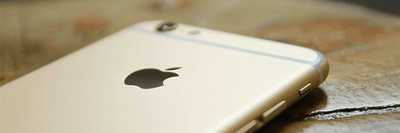
"Every once in a while, a revolutionary product comes along that changes everything," said Steve Jobs in early 2007, when he announced the first Apple iPhone.
That day, Steve Jobs introduced a revolutionary product in all three of these categories:
- A widescreen iPod with touch control
- A revolutionary mobile phone
- A breakthrough internet communicator
That day, Steve Jobs launched a single product called the iPhone, which reinvented the entire category of smartphones. It was one easy-to-use device, not three separate items, integrating the three exciting features of widescreen touch control, a mobile phone, and internet communication.
Revolutionary User Interface: easy-to-use widescreen with touch controls
Until the arrival of the iPhone in 2007, smartphones were mainly for business people. The gadget was expensive, even though it offered only a limited number of functions, such as basic email and relatively slow internet access.
At that time, the market leader with the largest share was BlackBerry. Its signature design was an embedded QWERTY keyboard, which took up considerable space on the device's front side. Most smartphone brands at that time had the same composition as a de facto standard. The historical introduction of the iPhone and its widescreen with touch control caused the physical keyboard on smartphones to vanish into the mists of time [1].
Apple got rid of all the keyboard buttons and replaced them with a large screen, allowing users to scroll through the screen with their fingers directly by touch. Having only a screen on the face of the smartphone has become a market standard since then. Afterward, smartphone design improvements have consisted of, more or less, minute adjustments of size, resolution, or the touchscreen's look and feel.
Some customers still miss the touch, speed, and accuracy of a physical keyboard like the BlackBerry, but mobile phone accessories have sufficiently met that need.
Internet communication device
Until 2007, internet capabilities on smartphones were no more than email and text-based search results. Battery-hungry and computing power-demanding features, such as manipulating image-rich materials, running games that require fast throughput, or navigating Google Maps, had users heading to a desktop.
The iPhone announced in 2007 presented PC-class applications and network capacity, with features way smarter than any brand being offered at the time. Steve Jobs called what those other brands had “baby software,” run on a very light and basic operating system.
For today's users, the application and networking features of the 2007 iPhone may look like baby steps as well. However, BlackBerry, Palm, Nokia, and Motorola, the smartphone market's major players in 2007, all failed to outsmart Apple's innovation and eventually petered out [2] in the following years.
Opening the way for a near-infinite number of applications, the "widescreen touch control + mobile phone + internet communication" device released in 2007 "changed everything" about the smartphone experience. Enhanced utility and more comprehensive functionality made the smartphone, which used to be limited to the business segment, a main product of the general consumer market. For those in their 20s and 30s, having been using smartphones for 10 to 15 years, a phone has always been "a computer in hand."