
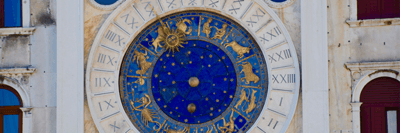
“What’s your sign?” You might have heard this line from a close friend, or even someone you’re just meeting. Perhaps you’re a confident Leo or a chatty Gemini; either way, some believe the day you were born has a big impact on who you are today. Astrology differs across the world, though, and it can be fascinating to explore the ways that astrology differs from one part of the globe to another.
Astrology and horoscopes have captivated [1] people around the world for centuries. While the practice of divination and foretelling [2] is prevalent [3] in various cultures, there are distinct differences between Western astrology and its counterpart in the East, including South Korea. In the Western world, astrology primarily relies on the zodiac signs, which are determined by the position of the sun at the time of a person’s birth. Western astrology focuses on personality traits, compatibility, and future predictions based on the zodiac sign's characteristics. People often consult their Western horoscopes to gain insights into love, career, and general life directions.
On the other hand, South Korean astrology follows a unique approach known as "saju." Saju incorporates four pillars, including the year, month, day, and time of birth, to create a detailed profile of an individual. Instead of focusing solely on zodiac signs, saju emphasizes the influence of cosmic [4] energies on a person’s life. South Koreans often consult saju masters for guidance on important life decisions, such as marriage, career choices, and health matters.
Superstitions [5] also play a significant role in both American and South Korean cultures. In America, it is commonly believed that you will have seven years of bad luck if you break a mirror, while you will have good luck if you find a coin facing heads-up. In Korea, writing your name in red ink is considered to be a death threat, while dreaming of pigs is considered to be a sign of wealth. Speaking of pigs, the Korea zodiac or “ddi” is more commonly discussed in South Korea than Western horoscopes, as animals (and their respective characteristics) are assigned to each birth year.
Exploring the differences between Western and South Korean astrology and superstitions provides fascinating insights into the diverse ways cultures perceive and interpret celestial influences. Whether one follows Western horoscopes or delves into [6] the intricacies [7] of saju, astrology continues to capture the imagination and curiosity of people worldwide.
Do you follow astrology yourself? If so, tell us—what’s your sign?