
In a photo clearly a work of a professional, a shirtless man is posing suggestively [1], and his ripped torso is glossed over with what appears to be oil. His bulging pecs are beyond well-defined, yet his physique is not unfamiliar—we have seen a version of this in Superman and Michelangelo’s sculptures. Or it could be a woman, her midriff sporting abs and tight outfit flattering the natural curves of her body.
In South Korea, this is a new genre of photography called “bodee-pruhpeel: Korean dictation of the words ‘body profile’”. Body profiles are meant to document the body in its “ideal” physique, characterized by low body fat and relatively high muscle mass obtained through weight training. A more built physique is considered ideal in men in contrast to the lean body type with hints of muscle definition in women. In fact, body profiling is more than the photo shoot itself; it is understood to encompass [2] the entire journey one goes through to reach “the ideal physique,” a prerequisite for taking body profile photos, including working with a personal trainer and going on a restrictive diet.
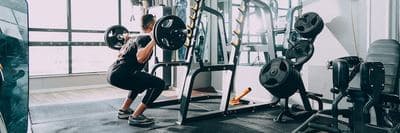
As the country has grown richer and produced more office workers with sedentary [3] lifestyles, interest in physical fitness, and in particular, different forms of strength training, is growing among South Koreans. Aside from the popularity of body profiling, new words such as “ow-oon-whan: abbreviation of ‘today’s workout complete’” or “a man/woman who works out” that are all over social media attest to the growing work-out culture outside the professional fitness community and its immediate milieu [4].
Unsurprisingly, the fitness industry, and in particular personal training, is growing. According to Shinhan Card, spending on personal training by Millennials and Gen-Zers in the first half of the year increased by 393% compared to the same period in 2019. “Taking care of one’s health has become part of Millennials and Gen-Z’s culture,” said a person familiar with the matter. Widespread availability of protein beverages and supplements, typically identifiable with the English word “protein” spelled out in Korean on the package, signals a heightened awareness of the importance of this macronutrient, a muscle-building element, among the lay [5].