
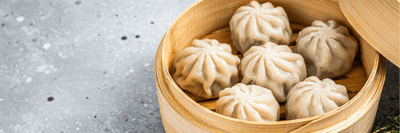
A soup dumpling comes to life and begins to cry just moments before a mother would have taken a bite out of him. She is alarmed, unsurprisingly, but naturally, she decides to take on the dumpling as her own child. She cradles him as one might a baby, keeping him safe from harm, even going as far as to replenish [1] pork stuffing when the baby dumpling is injured in a game of soccer with his friends. But one day, the baby dumpling, like all babies, grows up and tries to move out of the house.
In Bao, a 2018 Pixar short, a Chinese-Canadian mother suffering from “empty-nest syndrome” is given another opportunity to raise a child, this time in the form of a dumpling. The silent short film clearly portrays the overwhelming nature of parental love through its visuals and audio. Domee Shi, the film’s director, reported that the dumpling idea came from her own mother, who would often say: “I wish I could put you back in my stomach so I knew exactly where you were at all times.” The sentiments expressed within the short have stirred up some controversy, however, especially among Asian viewers living in the West.
When the dumpling ultimately tries to leave his home, the mother character consumes him in a tearful moment of love and despair. The short then reveals that the dumpling was ultimately a metaphor for the mother’s own human child, who seems to have left the home at some unstated point. When he returns, feeling obligated to make up for his absence, he partially earns his mother’s forgiveness by way of a few char siu buns.
Some critical viewers have noted that the story seems to glorify the overbearing [2], overwhelming, and even abusive love shown by the mother character. Because the short concludes with a happy ending, showing a family consisting of mother, father, son, and the son’s partner, the story seems to associate happiness to family reunion, seemingly idealizing filial piety [3]. Others, however, simply view the film as a reminder to cherish one’s parents and to remember the sacrifices and challenges immigrant parents face in raising a child.
Ultimately, the story’s setting in a Chinatown within a Western country serves as a great metaphor for the complex dynamics that families crossing cultural boundaries have to navigate. The notions of filial piety in the East are thrust against the Western emphasis on youth culture, but the final takeaways remain up to the viewer. All in all, the dumpling is adorable and the food seems delicious; chances are, the story is one that will stick with you, for one reason or another.