
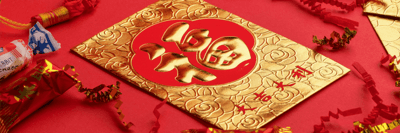
Seollal morning, children and young adults have their hearts tinted with a shy excitement. For adults, a bittersweet moment awaits, which they prepared the day before by visiting a local bank and withdrawing crisp [1] bills. Yes– they’re all anticipating the offering of money envelopes.
In Korea, on Lunar New Year’s Day morning, family and relatives gather together for an ancestral ritual. After this early morning ceremony, they have breakfast and initiate the sebea, in which younger people kneel down and bow deeply to their parents and elderly relatives. You can usually expect a cascade of bows since there are many layers of hierarchy in a traditional Korean family– you bow to your parents, your parents bow to their elders, and so on. After the bow, a colorful money envelope comes out of the elder’s breast pocket or from underneath their crossed legs.
The practice of giving money envelopes on Seollal is deeply ingrained in Korean culture. In fact, many Asian countries, including China, Vietnam, Taiwan, and Japan have a very similar tradition. In China, people exchange Hóngbāo, or the red money envelope, to wish their loved ones good luck in the new year. Moreover, although the money envelope tradition seems to have existed in Korea forever, it was imported into the country in recent history.
According to the government of Korea’s official website, experts look at China to explain the origins of the money envelope: the tradition of greeting each other with “Gong xi fa cai (恭喜發財)” and offering the red envelope on Lunar New Year’s Day spread to Japan and was introduced to Korea during the Japanese annexation [2]. But for decades after the money envelope was known, Koreans mostly shared food and dried persimmons instead of money to wish each other a happy new year. It wasn’t until the 1960s, when (South) Korea’s economy began a phase of exponential growth, that people started to slip new money in envelopes for Seollal.
Chinese legend has it that the money envelope tradition began as a way to protect children from the Chinese demon Sui, who would appear the night of New Year’s Eve. In Korea, the envelope money is not associated with demons, nor do they say “gong xi fa cai,” which means, “become rich.” Yes, the tradition may have taken on a slightly different form and sentimentality as it entered Korea, but the spirit of sharing love and care remains across borders and generations.