
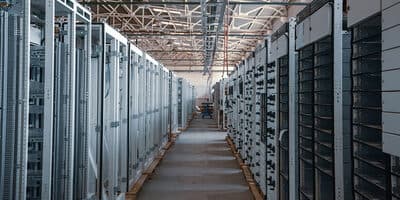
Every time someone asks an AI a question, those words travel to a data center: a huge building packed with thousands of computers, running day and night. This is where AI actually lives. The more people use it, the more of these buildings the world needs. And yet, almost nobody wants one next door.
For years, towns around the world competed fiercely to land [1] a data center. Governments offered tax breaks [2] worth billions to lure any tech company that would build within their borders, promising their communities jobs and revenue. But as the AI boom sent demand soaring and data centers grew larger and hungrier, the mood began to turn. In the second half of 2026, several U.S. states, including Texas, moved to halt or freeze new projects, some affecting well over a thousand sites at once. The suitors had become the gatekeepers.
The scale of this reversal [3] is striking, and it crosses borders. In Ireland, data centers now consume more than a fifth of the nation's electricity, and a moratorium [4] has slowed new construction near Dublin. In Chile, a court sent one of Google's projects back to the drawing board over its water use. Surveys in multiple countries find that most people oppose having a data center built near their home, and the resistance cuts across every political line.
The complaints are concrete. Data centers drink enormous amounts of water to cool their machines, a serious matter in drought-prone [5] regions. They consume so much electricity that neighbors blame them for rising utility bills. Their cooling systems roar around the clock. In short, the costs are local and visible, while the benefits feel distant and shared by everyone but the host town.
And here lies the paradox. The world has never wanted what data centers provide more than it does now. Every search, every streamed show, and above all every AI query runs through these vast warehouses of humming servers. The very public that resists them spent the last two years marveling at [6] chatbots and generating images by the millions. People want the intelligence; they simply do not want the building that houses it.
This is the heart of the dilemma. AI needs real infrastructure somewhere, and that infrastructure has to sit in a real community. The technology cannot exist without the buildings, yet communities keep saying no to them. So the question is no longer whether we will use AI. We already do constantly. The question is who will live beside the machines that make it possible, and what we owe the towns we ask to carry that weight.