
Production Eng
Planning Production
Production English (1)
Updated: 2026.01.01
1 min read · Intermediate
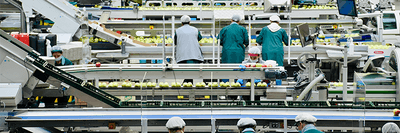
The foundation of any successful manufacturing operation is a realistic production plan. This session focuses on the practical side of setting schedules—balancing material availability and machine capacity to meet deadlines. Rather than discussing high-level corporate strategy, we will focus on the everyday language used to explain "when we can finish," "how we handle rush orders," and "what happens when the schedule changes."
[Tips for Success]
- For Students: Think about the weekly or monthly schedule you currently manage. Using at least 4 phrasal verbs from the list below, explain to your tutor how you build your schedule and how you react when something unexpected (like a material shortage) happens.
- For Tutors: Do not worry about industry-specific details. Instead, focus on whether the student can use phrasal expressions accurately and improve the natural flow of their sentences. Feel free to ask clarifying and/or follow-up questions to better understand their ideas.
[10 Essential Phrasal Verbs & Examples]
- Draw up: To prepare or write out a formal plan, contract, or production schedule.
Example (Automotive): Our department needs to draw up a new production schedule for the electric SUV assembly line by Monday.
- Map out: To plan the details of a specific process, workflow, or physical layout.
Example (Semiconductors): Let’s map out the cleanroom expansion to ensure the new equipment doesn't interfere with existing wafer fabrication.
- Set up: To prepare, configure, or assemble machinery and tools for a specific production run.
Example (Apparel): It takes roughly 45 minutes to set up the specialized sewing machines for a different fabric type.
- Factor in: To include a specific variable, risk, or piece of information when planning or forecasting.
Example (Pharma): When scheduling the next batch run, make sure to factor in the 24-hour mandatory sterilization period.
- Look ahead: To think about and prepare for future needs, deadlines, or market shifts.
Example (Consumer Electronics): We must look ahead to the holiday season to ensure we have enough display panels in stock for the peak demand.
- Push back: To delay or postpone a scheduled start time, deadline, or completion date.
Example (Chemicals): The reactor maintenance was extended, so we have to push back the catalyst loading by two days.
- Bring forward: To move a scheduled task, meeting, or completion date to an earlier time.
Example (Shipbuilding): The client requested early delivery, so we are trying to bring forward the final sea trials by one week.
- Run out of: To finish the entire supply of a specific material, component, or resource.
Example (Food & Beverage): If we run out of glass bottles, we will have to switch the entire bottling line to aluminum cans.
- Scale up: To increase the volume, size, or speed of production to meet higher demand.
Example (Aerospace): To meet the new government contract, our facility is planning to scale up its wing assembly operations this quarter.
- Stick to: To follow a set plan, budget, or schedule without making any changes.
Example (Steel): Despite the rising energy costs, we must stick to the current furnace schedule to fulfill our existing customer contracts
[Discussion Questions]
Students, please prepare your answers using the phrasal verbs above.
- What is the most important document you have to draw up before starting a new production cycle?
- Have you ever had to push back a deadline because you ran into a shortage of materials?
- How do you factor in machine maintenance when you map out the monthly schedule?
- If a client asks to bring forward a delivery date, what parts of the process can you realistically speed up?
- When you need to scale up production volume quickly, what are the biggest challenges you face in setting up the additional machinery?
- How far do you typically look ahead when making your long-term material procurement plan, and how important is it to stick to that original projection?
- What is your contingency plan if you suddenly run out of a critical, long-lead time component?
- Besides direct labor, what non-obvious costs do you need to factor in when your team decides to scale up production capacity?
*本教材は、Ringleを使用して英語を学ぶ学習者向けに設計されています。