
For most of us, electricity is a silent background utility. We take it for granted as long as our devices stay charged and the lights stay on. However, we are entering a new era where Artificial Intelligence (AI) is reshaping civilization. Behind this digital revolution lies a hidden driver that determines the pace of innovation: electricity. As AI data centers consume massive amounts of energy, the world is searching for stable, carbon-free power. Among the various contenders[1], the Small Modular Reactor (SMR) has emerged as a focal[2] point of both great hope and significant debate.
To understand why SMRs are trending, we have to look at the current energy landscape. The role of fossil fuels like coal and LNG is currently a subject of intense controversy. While many advocate for their rapid phase-out[3] to fight climate change, others argue they remain essential for maintaining a steady energy supply. Meanwhile, renewable energy faces challenges with consistency, and traditional nuclear power is often hindered[4] by billion-dollar price tags and decades-long construction timelines.
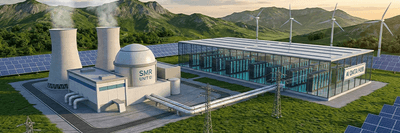
SMRs attempt to find a middle ground. Think of them as a more flexible, "compact" version of nuclear power. These units are about one-third the size of traditional reactors and are modular, meaning they can be factory-built and shipped for on-site assembly. This approach could lower costs and significantly shorten construction schedules.
One of the most striking trends is the private sector's involvement. Bill Gates, through his company TerraPower, is currently building a reactor in Wyoming that utilizes liquid sodium instead of water to enhance safety. Unlike water, liquid sodium has a much higher boiling point and can cool the reactor under normal atmospheric pressure, significantly reducing the risk of a pressure-driven explosion. Furthermore, tech giants like Microsoft and Google are exploring SMR investments to power their energy-hungry data centers directly.
However, the path forward is not without hurdles, and many experts urge caution. There is a growing debate over private-sector involvement in nuclear energy. Critics worry that if corporations lead the development, the focus might shift from public welfare to corporate profit. This leads to concerns regarding long-term safety standards or the possibility of data centers being prioritized over the energy needs of residents.
Furthermore, significant legal and economic challenges remain. Most current nuclear regulations were written for massive, state-run plants, leaving a "legal vacuum" for these newer, smaller designs. Questions regarding the management of radioactive waste and the actual cost-effectiveness of SMRs compared to cheaper renewables are still being debated. There is also the matter of social consensus—convincing the public that a local reactor is truly safe remains a daunting[5] task.
In conclusion, SMRs represent a fascinating intersection of tech innovation and energy policy. They offer a promising vision for a carbon-free future, but their success depends on more than just engineering. Balancing corporate ambition with public safety and strict oversight will be the true test for this emerging technology.