
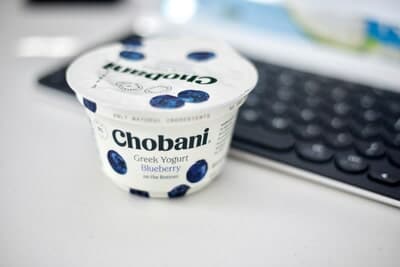
In the US, yogurt once occupied a sliver [1] of the dairy aisle; now supermarkets dedicate an entire section to it. From Greek yogurt to non-dairy options, there are dozens of yogurt brands and types from which to choose, including varieties that didn’t exist in the ‘90s. The yogurt industry’s transformation in the past decade has been led by Chobani, a company that pretty much created the Greek yogurt category in America.
Chobani was founded in 2005 by Hamdi Ulukaya in an abandoned Kraft yogurt facility. Ulukaya was an immigrant from a family of dairy farmers in Turkey. He arrived in the states with $3,000 in his pocket in 1994, hoping to learn English.
After graduating from the University of Albany, he took a job on an upstate farm. Seeing an opportunity in the gap between America’s voracious [2] appetite for cheese and the inferior quality of cheese available in the market, Ulukaya started importing his family’s feta cheese from Turkey. As the feta cheese proved popular, he opened a small wholesale feta cheese factory, Euphrates, in Johnstown, NY. Despite the business’s moderate success, Euphrates barely stayed afloat for the following two years.
Ulukaya then discovered an abandoned Kraft yogurt factory in upstate New York. Where Kraft saw an unprofitable business, Ulukaya saw an opportunity. In a Fortune’s Leadership Next podcast episode, he recalled that he thought he could make something better than Kraft with all the hardworking people who had become jobless. He bought the defunct [3] factory and hired former Kraft employees and Turkish dairy experts; Chobani launched in 2005, and the first yogurt sales occurred in 2007.
The food and beverage market is nearly impossible for upstart companies to penetrate. Chobani did exactly that by catering to American tastes while adding a fun and healthful twist to yogurt. Before Chobani, yogurt was mostly consumed in a highly-processed and sugary form. This yogurt style can be traced back to the post-World War II era of cans, boxed mixes, rations, and instant coffee. This was when American consumers preferred convenient food and weren’t used to the taste of pure yogurt. Frank Palatoni, now former vice president of marketing for Dannon, told Vox that the problem was that in its pure form, “yogurt tasted terrible to the American palate [4].” Consumers who associated dairy products with milkshakes and ice cream didn’t appreciate the sour and tart flavor of unsweetened yogurt. Attempts at introducing Greek yogurt or other healthy forms of yogurt to the broader market weren’t successful in the ‘80s and ‘90s, but Chobani was able to break through in the aughts.
The brand offered healthier alternatives to sugar-laden [5] products at an affordable price, but its yogurt was still sweet enough to satisfy the American palate. Chobani used (and still prides itself on using) real milk and cream while avoiding artificial sweeteners, oil, and thickeners. Within a few years of launching, Chobani yogurt was flying off the shelf. In 2009, the company scored a major deal with Costco. This allowed the firm to expand its manufacturing capabilities and experiment with new product lines. Chobani’s annual sales now run in the billions, and it reigns supreme in the US yogurt sector.
Chobani has been actively branching out to creamers, coffees, and milks. Chobani’s first foray outside its core offering happened in 2019 when it launched Chobani Oatmilk. Since then, it has expanded its reach to cold brew, coffee creamers, and milk. The company generated $2.53 billion in net sales in 2023, up 12% from a year earlier.
Ulukaya, the “yogurt king” who pioneered a new style of yogurt, has led Chobani for the past 20 years with empathy and compassion. At the core of his mission to give back to the community lies his mission to help refugees and people outside of the US suffering from humanitarian crises. In 2016, he established the Tent Foundation (now the Tent Partnership for Refugees) to bring together companies to support refugees. About 30% of his current employees are Afghans, Syrians, or others who had to leave their countries due to war, famine, or a natural disaster.