
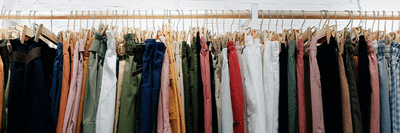
Since people first began making clothes, they have defined their wearers. Whether because of the spectacular colours they have been dyed or the finest needlework that adorns them, clothes have long acted as symbols of wealth, status, power and religious, cultural or political affiliations. The clothes can be seen as a product of the techniques and the materials used in making them, and the more costly and sought-after [1] this labour or these inputs were, the more expensive clothes would be. Likewise, as artisanal techniques dyeing, weaving, sewing and embroidery unique to each part of the world developed, clothes began to take on a geographical and cultural signature too.
Trend-following vs. trend-setting
Since time immemorial, people have been aspiring to wear the clothes of others. The wife of Napoleon Bonaparte, Empress Josephine, is an early example of a trend-setter. During the 19th century, she was often painted draped in a shawl of paisley, an extremely detailed and beautiful fabric made out of pure cashmere, woven by skilled artisans in the north Indian region of Kashmir, that her husband had brought back for her from one of his numerous journeys to the East. Soon wealthy women across Europe were emulating [2] her style.
To look at a more modern example, we can turn to the world of hip-hop. Ever heard of Logomania? Well, it describes the trend of clothes characterised either by excessively large, blingy or numerous logos. As early as the late 1980s, popular American hip-hop artists began to take a fancy to designer clothes that made no secret of the fact they were designer - namely clothes with the logo strewn [3] all over them. These pieces had originally started as counterfeit [4] goods designed and made by Harlem-based designer Dapper Dan, a.k.a. Daniel Day, who notably refused to call them “knock-offs”, instead claiming his reinvention of the logos qualified the pieces as “knock-ups.” These visible and oftentimes flashy symbols of brand loyalty and wealth became all the rage on the expanding hip-hop scene, and designers noticed, creating ever more logo-centred pieces to cater to the growing demand, this time coming straight down the runaways of the most notorious fashion houses.
Circularity in Fashion: looking beyond trends altogether
As the world changes, and people become more aware of the impact that the decisions they make and the things they consume have on the environment, the idea of circularity has come to dominate the conversation around the clothes we wear. Central to the notion of circularity is the idea that the life cycle of the clothes we wear should be extended to as long as is possible, and certainly much longer than the current culture of fast fashion permits. Alongside this, importance is placed on what happens to the item of clothing when it finally does reach the end of its life cycle - could it be recycled or even upcycled?
Many people have begun to express the idea that it isn’t the clothes that we wear that define us, and that this idea is merely a construct of the fast fashion industry which encourages us to buy into new trends and fads [5], changing our clothes with every season that comes and goes. Yet if we rethink our relationship with clothes, proposing instead that we as the wearers define the clothes, then we could look towards a more sustainable future of fashion.
So what do you do? Do you follow trends or do you set them? Do you let yourself be defined by the colours, styles and brands you wear or do you march to the beat of your own fashion drum?