
Production Eng
Handling Breakdowns
Production English (7)
Updated: 2026.01.01
1 min read · Intermediate
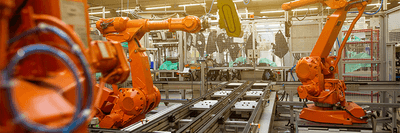
When production stops, every minute counts. This session focuses on the language needed to handle equipment failures, communicate with technical teams, and manage emergency repairs. You will learn how to describe mechanical issues, coordinate with technicians, and ensure that the production line gets back to full capacity as quickly as possible.
[Tips for Success]
- For Students: Think of a time when a critical machine or system failed in your workplace. Use at least 4 phrasal verbs from the list below to explain how the problem was identified, reported, and eventually resolved.
- For Tutors: Do not worry about industry-specific details. Instead, focus on whether the student can use phrasal expressions accurately and improve the natural flow of their sentences. Feel free to ask clarifying and/or follow-up questions to better understand their ideas.
[10 Essential Phrasal Verbs & Examples]
- Break down: To stop functioning or working properly (specifically for machines or vehicles).
Example (Production): If the conveyor belt continues to overheat, it might break down before the end of the shift.
- Check out: To examine or inspect something to ensure it is in good condition or to find a fault.
Example (Maintenance): I’ve called the technician to check out the strange noise coming from the hydraulic press.
- Shut down: To stop the operation of a machine, system, or entire facility for safety or repairs.
Example (Safety): We had to shut down Line 3 immediately after the sensor detected a gas leak.
- Back up: To provide support or to have a secondary system ready in case the primary one fails.
Example (IT): Our secondary server will back up the main system if the power goes out during the update.
- Find out: To discover a fact or piece of information, such as the root cause of a failure.
Example (Engineering): We are trying to find out why the robotic arm keeps losing its calibration every few hours.
- Turn off: To stop the flow of electricity, gas, or water to a machine.
Example (Emergency): Make sure to turn off the main power switch before you start cleaning the internal gears.
- Go off: To stop working or to fail suddenly (often used for power, lights, or alarms).
Example (Facility): The lights in the assembly area suddenly went off, causing a temporary halt in production.
- Wear out: To become thin, weak, or useless through long or hard use.
Example (Parts): These rubber seals tend to wear out every six months and must be replaced proactively.
- Set up: To assemble or prepare equipment so that it is ready to be used.
Example (Installation): It took the team nearly four hours to set up the new laser cutting machine correctly.
- Fix up: To repair or improve the condition of something that is old or damaged.
Example (Repair): We managed to fix up the old generator so it can be used as an emergency power source.
[Discussion Questions]
Students, please prepare your answers using the phrasal verbs above.
- What is the most common reason machines break down in your factory?
- When a machine stops working unexpectedly, what is the first thing you check out to diagnose the problem?
- In what situation would you be forced to shut down the entire production line?
- Do you have enough spare parts to back up your most critical machines?
- How do you find out if a specific part is starting to wear out before it actually fails?
- How long does it usually take to set up a backup system when the main power goes off?
- Is it better to fix up old machinery or invest in brand-new equipment when production slows down?
- Who is responsible for making sure all safety protocols are followed before a technician starts to look into a faulty machine?
*This material is designed for the exclusive use of Ringle students on the Ringle platform.