
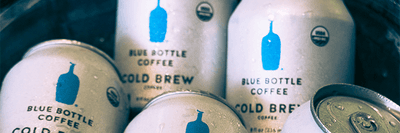
Blue Bottle is a premium coffee brand based in California. A minimalist logo, slick [1] interior design, and fresh coffee beans all contribute to justifying Blue Bottle’s five-dollar coffee, but its transformation from a neighborhood brand to a multi-million-dollar business is partially explained by history, and by Starbucks.
There was a time when five dollars for a cup of coffee was an unthinkable proposition [2]. When coffee was first popularized in the 19th century, it was a commodity—like sugar or corn. In the 20th century, instant coffee in the form of “coffee compounds” was mass produced and consumed. The provenance of beans—where they came from—barely mattered as long as a convenient caffeine fix was available.
From this mechanical and barren [3] industry emerged a coffee culture in the 1970s. Starbucks first opened its doors in 1971. Inspired by former CEO Howard Schultz’s concept of the third place outside the home and the office, the coffeehouse started serving coffee as an experience rather than just a beverage. The number of coffeehouses grew in the following decades, and their place in popular culture solidified through American media, such as in the show “Friends” (in the sitcom, the castmembers always hang out in a coffee house).
Enter Blue Bottle. The brand, started by James Freeman in 2002, has built its reputation on this coffee culture. Paying a premium for a better experience had been normalized by Starbucks by the time Freeman set up his operation in a shed near his apartment. To offer an even better experience than existing coffee houses such as Starbucks, Freeman focused on coffee itself. Freshly roasted coffee beans—this was his point of differentiation.
He racked up [4] $15,000 in debt to start his business but built a steady following in farmer’s markets around San Francisco and Oakland, and opened the first location in 2005. In September 2017, Nestlé bought a 68% stake in Blue Bottle, valuing the brand north of $700 million. Today, there are about 100 stores in the US and in East Asia, including Shanghai, South Korea, and Japan. This fast growth is partially explained by Blue Bottle’s appeal to millennials as a post-Starbucks: offering what Starbucks has been offering while doing it differently and more expensively.
In an interview with CNBC, Freeman said, “We have a lot to thank Starbucks for in terms of creating a market where people want to go out to have coffee and feel like that is a fun and acceptable thing to do.” There are mixed forecasts about the company’s future since some experts say expensive coffee is not recession-proof. Regardless, Blue Bottle exists thanks to Starbucks and it is also opening a new horizon [5] for yet to be known, future trends.