
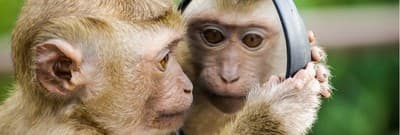
In 2011, British photographer David Slater traveled to Indonesia to take photos of the wildlife. Unexpectedly, Slater was followed by a group of monkeys, one of which became fascinated by the camera and took a number of playful selfies. When Slater shared the selfie with the rest of the world, Wikipedia claimed the photo was in the public domain because a monkey cannot own copyright. The seemingly benign [1] photo initiated a series of legal disputes in US courts, the underlying question being: Can animals have legal rights?
The “Monkey Selfie” Case
The case raised arguments from various stakeholders. Slater claimed that he had valid copyright status since, by bringing the camera and accompanying equipment, he had engineered the situation that resulted in the photo. Conversely, Wikipedia argued that copyright must be held by a creator, namely a legal person. As an animal is not a legal person, it cannot be a creator, and thus the images must be in the public domain. Consequently, Slater claimed that he had lost £11,000 due to loss of income from the images being available to the public. In 2014, the US Copyright Office held that works created by non-humans are not copyrightable. Although several legal experts have suggested that Slater’s pivotal role in engineering the photograph should be sufficient to establish copyright, the case would have to go to court to make a final judgment.
An alternative dispute arose when controversial advocacy group People for the Ethical Treatment of Animals (PETA) attempted to establish precedent [2] that animals can own copyright to a selfie. PETA claimed that their organization could be appointed as administrator of the photo, and use its proceeds to benefit endangered species protection. Following a series of appeals, the case ultimately came to fruition [3] in 2018, when a court declared that animals cannot hold copyright under US law. Whilst Slater and PETA agreed to a settlement in which a proportion of the future profits on the photographs would be donated to wildlife organizations, the US court expressed concern that PETA had been motivated by self-interest, rather than goodwill to protect the legal rights of animals.
Should Animals Have Rights?
The intriguing question underlying this case is whether animals can have rights. The most prominent perspective is the animal welfare view, through which humans can justifiably exploit animals, yet have a duty to respect the animals’ well-being and ensure they are treated humanely. Increasingly, however, animal rights activists argue that this view is inadequate. Since Peter Singer published Animal Liberation in 1975, many activists believe that animals should be treated equally to human beings. For example, some activists would argue that it is pointless to treat caged chickens “humanely” if they are ultimately going to be killed for their meat.
The main argument for animal rights is that animals are sentient [4] and possess similar traits to human beings. For instance, various scientific studies have shown that monkeys can rationalize and demonstrate self-consciousness at the same level of human beings. Yet, animals are treated differently due to speciesism, a term referring to distinction based on the assumption that humans are inherently superior to animals. Whilst there are some laws that prohibit excessive animal cruelty, this does not cover the most common forms of animal exploitation, such as confinement, torture, and slaughter for meat and fur.
If these ideals are translated into “rights,” then these rights could be enforced in a court of law. Yet, this creates a web of issues. For example, who will bring the claim to court on behalf of an animal? How do we prevent animal welfare organizations, such as PETA, from bringing claims out of self-interest? What type of compensation would animals receive? Should we distinguish between different types of animals, such as ants and gorillas? Should we distinguish between rights? For example, while some people may agree that animals have a right to life, does this also extend to social rights? These concerns illustrate several issues that are yet to be resolved.
Conclusion
In conclusion, animal rights movements are gaining increasing momentum, underscored by the rise of veganism and use of cruelty-free products. However, our modern society remains firmly wedded to the animal welfare view, which permits animal exploitation for human benefit. Under US law, at least, it seems that animals cannot have rights. There are still many issues to be resolved regarding what animal rights look like and how they could be enforced. Although we are a long way from treating animals equally to humans, we can envision a future where the protection of animals is much higher on the agenda than it is now.